
It is a relief to see that gender identity beliefs remain entirely eliminated from the finalised Health education curriculum for Years 0-10 (5-15 year olds) that was released at long last on 15 September. The words ‘gender identity’, ‘transgender’, ‘intersex’, and ‘sex assigned at birth’ do not appear anywhere in the document.
Relationships and Sexuality Education, saturated with ‘gender identity’, is no more in New Zealand (unless a change of government turns back the clock). Even the name Relationships and Sexuality Education has gone, with the topic now fully absorbed into Health under subheadings for puberty, consent, and sexual relationships.
Although the new curriculum is decidedly better than the previous RSE Guidelines and will stop the teaching of gender ideology in most schools, in the approximately 10% of schools that still host Pride events or fly transgender flags, parents will need to continue to keep a close eye on the content of Health lessons.
No definition of ‘sex’
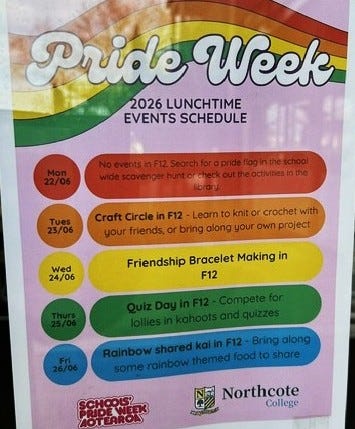
The concept of ‘gender identity’ has thankfully been discarded but it has not been replaced with a definition of ‘sex’ as a binary and immutable reproductive category. This means that a vacuum has been created whereby teachers can insert their own, often wildly wrong definitions, like this one presented to a Y7 class this year:
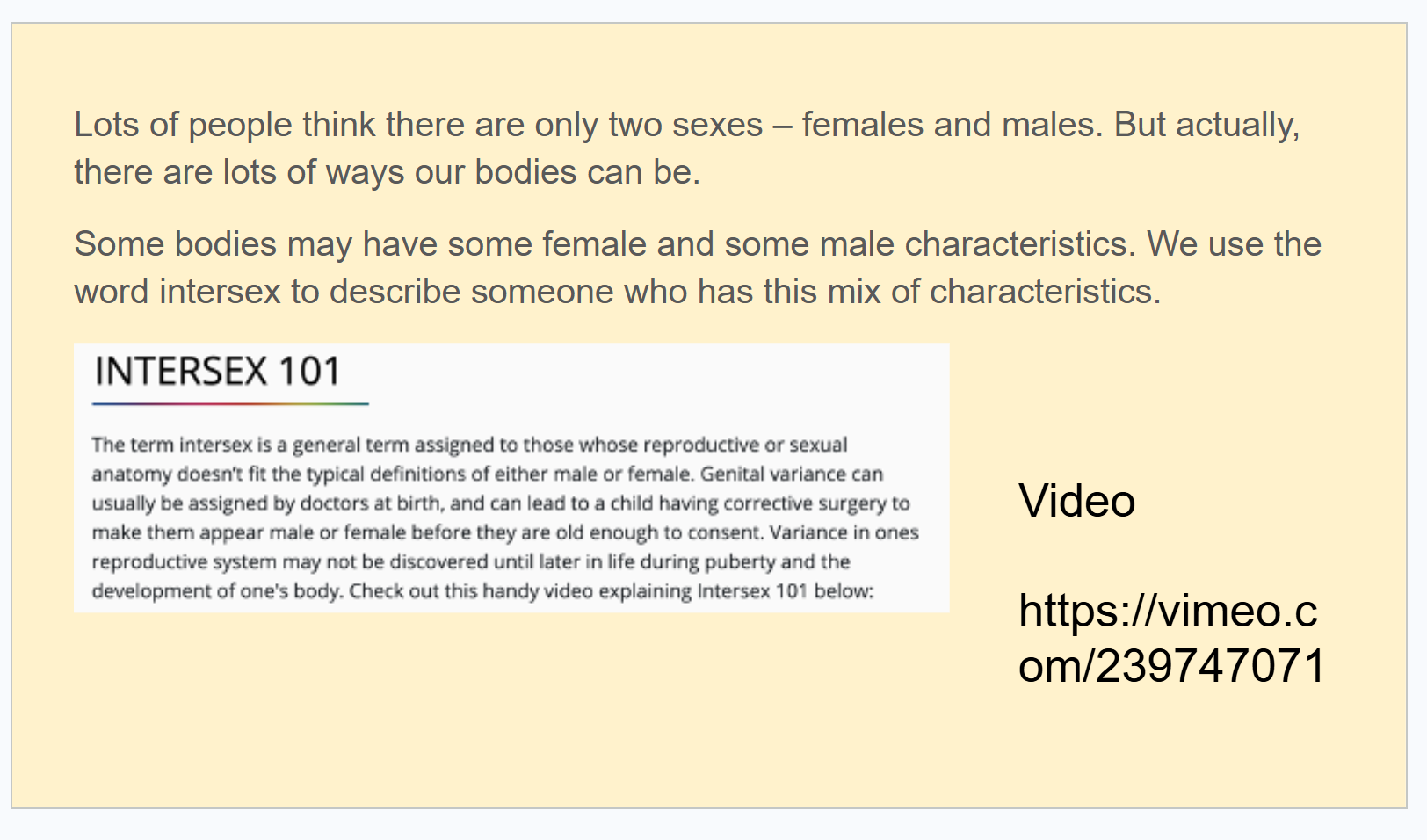
The Health curriculum rewrite began well in 2025 with the reality of the sex binary reinforced in factual language in the first draft:
…“male and female bodies have reproductive systems that work together during fertilisation” and “Females have ovaries, a uterus, and a vagina to make eggs and grow a baby. Males have testicles and a penis to make and deliver sperm.”
But somewhere between then and now, the writers have become coy about ‘sex’ and in the final version have avoided the word altogether. There is only one use of the words ‘male’ and ‘female’ in the whole curriculum and there are no definitions of male, female, or sex in the glossary.
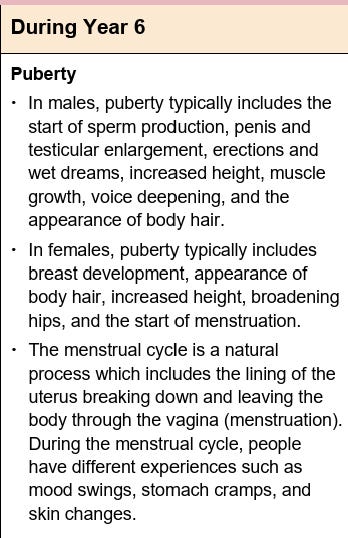
Note the incorrect use of “people” when describing possible effects of menstruation that only girls and women can experience.
Reproduction no longer part of health education
That females have ovaries, a uterus, and a vagina to make eggs and grow a baby and males have testicles and a penis to make and deliver sperm is no longer the chosen language.
Reproduction has been moved to the Y8 Science curriculum where it has been disconnected from relationships and partially disembodied:
Reproduction in mammals involves gamete formation (ovum and sperm), fertilisation, and development through the zygote, embryo, and foetus stages before birth.
Puberty occurs when organisms develop reproductive ability (see Year 8 Health and Physical Education: Puberty).
The menstrual cycle in females involves hormones that control ovulation and the growth and shedding of the uterine lining. In humans, the uterine lining is shed cyclically if fertilisation does not occur (menstruation).
Sperm production in males is regulated by hormones.
A hormone is a chemical substance carried by the blood that alters the activity of specific target cells or tissues.
Note that parents do not have the right to remove their children from Science lessons.
Homosexuality in hiding
Sexual relationships and the age of consent are topics included from Year 8 but, apart from the Science lessons about reproduction (above), there is no explanation of what is meant by a sexual relationship, nor any reference to sexual preferences or definitions given for ‘heterosexual’ or ‘homosexual’.
All the curriculum says in Y8 is:
There are a range of sexual activities in which consenting people experience and express their sexuality. These activities include different forms of physical contact and interaction for sexual pleasure, reproduction, or both.
By Y10 there is a little more information:
Thinking about sex and choosing to have consensual intimate experiences is a normal part of life. Desire, attraction, love, and pleasure differ between people and change over time.
The way the body responds to sexual stimulation involves various physiological processes (e.g. heart rate increases, blood flow to the genital area). What feels sexually pleasurable varies by person. Sexual activity is enjoyable when it is safe, consensual, and people know what feels good to them and to their partner.
That’s it.
‘Heterosexual’ and ‘homosexual’ do not appear in the glossary.
The ’identity’ loophole
Unlike ‘male’ and ‘female’, the word ‘identity’ appears many times in the curriculum. Mostly, it is used in harmless phrases such as “Groups and communities contribute to identity through shared experiences…”(Y4) or “People understand and express their identities in different ways…” (Y6) but there are some worryingly open-ended comments that might facilitate gender identity interpretations in teachers who are true believers.
The following statements (bold added) have the potential to be used by some teachers to, for example, advocate for open access to single-sex spaces and sport under the guise of ‘kindness’ and ‘inclusivity’.
Stereotypes based on identity (e.g. expected personal dispositions and social roles) can lead to unfair treatment. Eliminating this stereotyping requires challenging discriminatory social and cultural attitudes. (Y8)
Approaches to reducing stereotyping and stigmatisation include effective communication between groups, inclusive policies, and opportunities for people to learn about diversity. (Y9)
Identity-based exclusion harms people’s social, mental, and physical well-being. Understanding how exclusion operates in everyday situations allows communities to take informed action to improve inclusion and safety. (Y10)
Responses to discrimination include actions such as enforcing legal protections, changing institutional rules, questioning assumptions, and public advocacy. (Y10)
When talking about identity and inclusion, the curriculum doesn’t make it clear that children can only expect to be included into groups or spaces to which they belong and there is no right to be included in every group or space based on personal wishes.
RGE would prefer to see the end of ‘identity’ as a concept being taught in schools. Instead of basing their self-esteem on an ‘identity’ (which can been used to endorse transgender ideation), children should learn to be proud of their character, contributions, and achievements.
Other gaps
While pleasing to see that the curriculum includes online safety, power imbalances, coercive control and pornography, there are still some significant gaps.
Misogyny – a contemptuous attitude that negatively affects the whole population – needs to be examined, especially because there has been a recent rapid rise in misogynistic attitudes being expressed towards female teachers and students in our schools.
Abstinence. Mentioning this only once in the curriculum, in the context of contraception, is not sufficient. Abstinence should be discussed as a personal sexual choice, not just as a method of contraception.
Abortion. Although this is a contentious topic, students need to be informed about the availability of abortion as well as other options when faced with an unplanned pregnancy. It is introduced in Y11, but as Health is not a compulsory subject after Y10, most students will miss out on this topic.
Transgender ideation. RGE argued for transgender ideation to be part of the curriculum because it is everywhere in our modern culture – it is the elephant in the room. When transgender beliefs are not addressed in the curriculum, and no definition of binary sex is provided, there is no challenge in schools to the false idea that humans can change sex and the widespread confusion and harm this belief is causing will continue unabated.
We need to talk about gender ideology which has real life consequences for those who believe in it as well as those who don’t.
Heads in the sand
It appears that the curriculum writers found some topics too hot to handle. By not mentioning sexual preferences, misogyny, abortion, or transgender ideation, the writers have simply left it to the internet to educate our children on these matters.
We are pleased to see the curriculum purged of gender ideology and the explicit sexual content of the previous guidelines, but the imprecise nature of some of the topics seems to have again left the door open to embellishment by activist organisations. That is exactly how we ended up with the notorious 2020 RSE Guidelines which taught gender identity beliefs as if they are facts.
With no definition of sex, no clarity that male and female are reproductive categories, and no confirmation that sex is innate, binary, and immutable, these concepts are open to activist interpretation.
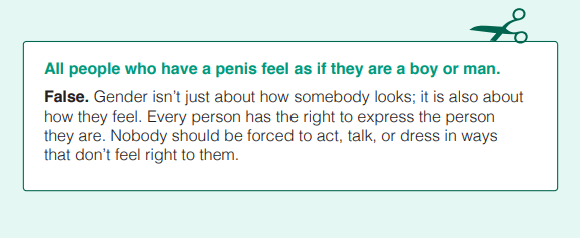
Sexual Wellbeing Aotearoa, whose resource Navigating the Journey, is used in many NZ schools, is ready and willing to fill the vacuum. The statement below is indicative of gender identity beliefs - that sex is a feeling, not a material reality - and SWA will, no doubt, do their best to find a slot for it and other such ideas in the new curriculum. They have plenty of time - two more years of the old curriculum - in which to refine a new resource.
Curriculum delayed two years
Even after three years of reviews and consulation, this new Health curriculum will still not be mandatory for Years 0-8 until 2029! In the meantime, schools are able to carry on using their existing resources, which often incorporate false information, sourced from SWA or the trans lobby group, InsideOUT.
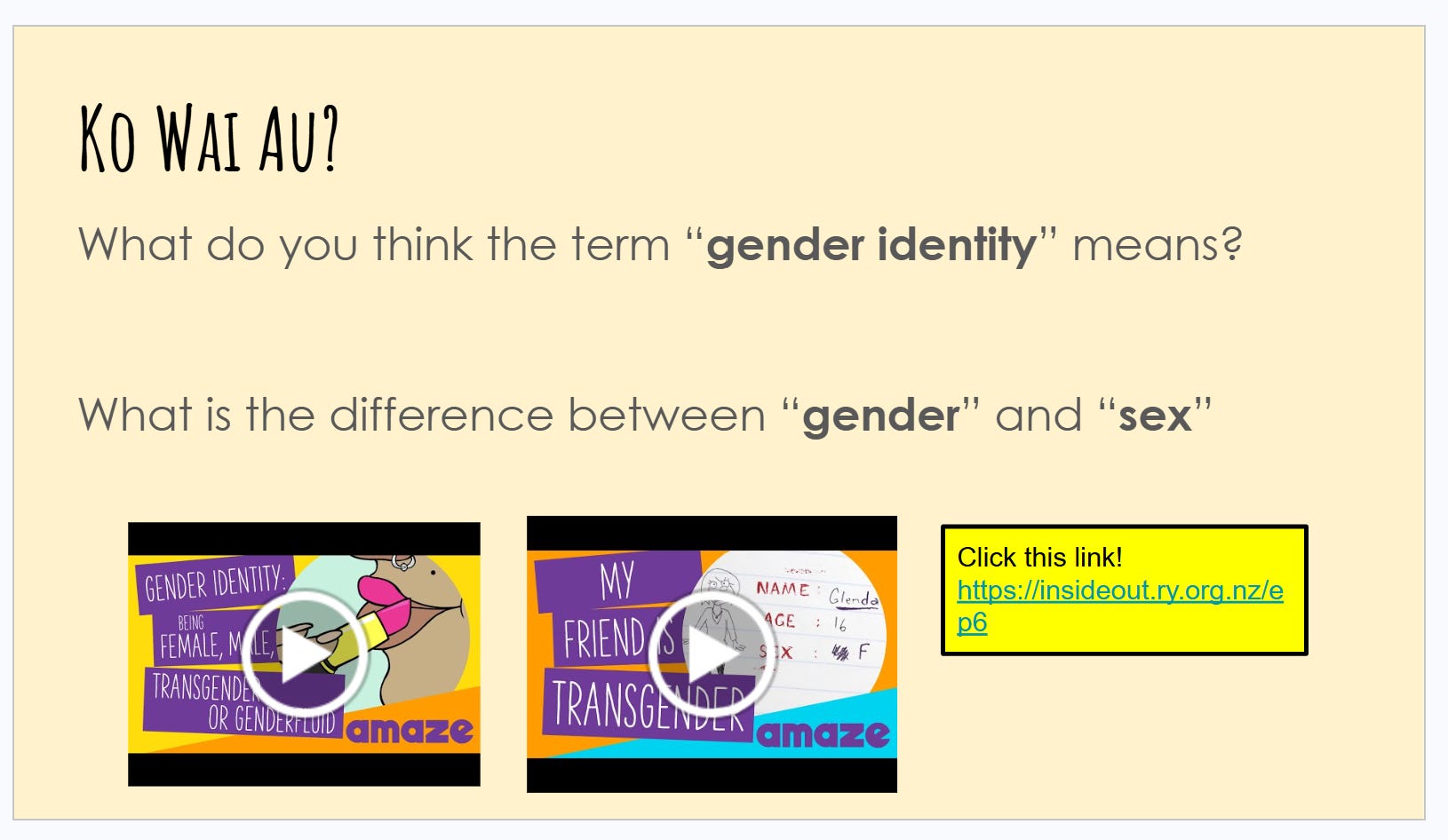
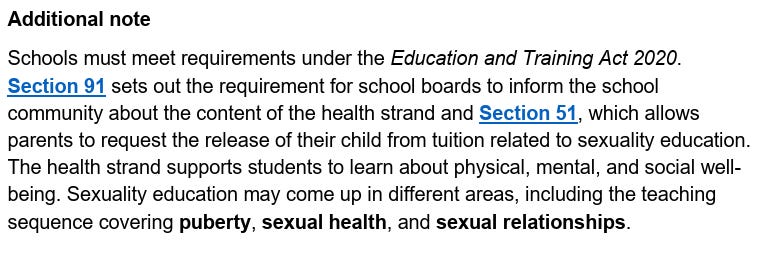
Parents need to remain alert to what is being taught to their children. Although schools must inform parents of lesson content (there is no longer a requirement to consult with them), the information provided is often scanty. Parents need to ask to see every slide, video, poster, worksheet, and script teachers will use in order to uncover any false information being taught.
Election jitters
We have a new, much better curriculum, but it is still too early to count our chickens.
If the election in November delivers a change of government, ‘gender identity’ could well be put back into the Health curriculum. Labour has promised a moratorium on further curriculum changes, but with a two year lead-in until the new Health curriculum becomes mandatory, there is ample time for gender identity beliefs to be re-introduced and it is certain that trans activists will be lobbying hard for that outcome.
If the current coalition government is returned, be on watch for resources from organisations like SWA and InsideOUT that add gender ideology to the basic curriculum content.
No reason to wait
The best response for parents is to press for the new Health curriculum to be actioned in your school from next year. There is no good reason to delay its implementation when it is sitting there, ready to use. If the school does not accept the urgency for change, ask to present this 12 slide power point to the board: We need to talk about gender identity.
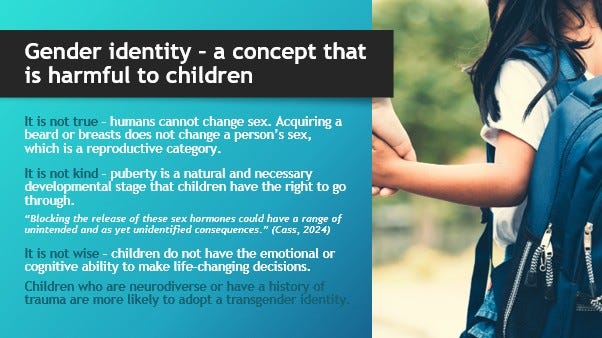
There is no time to waste in stopping teaching children that sex is a matter of choice. Too much harm has already been caused. Every year of delay produces another cohort of students who have been taught that ‘gender identity’ overrides the reality of sex and that being ‘trans’ is bursting with rainbows and glitter. We have the new curriculum; we can and must immediately stop teaching fasehoods about sex.
By Fern Hickson
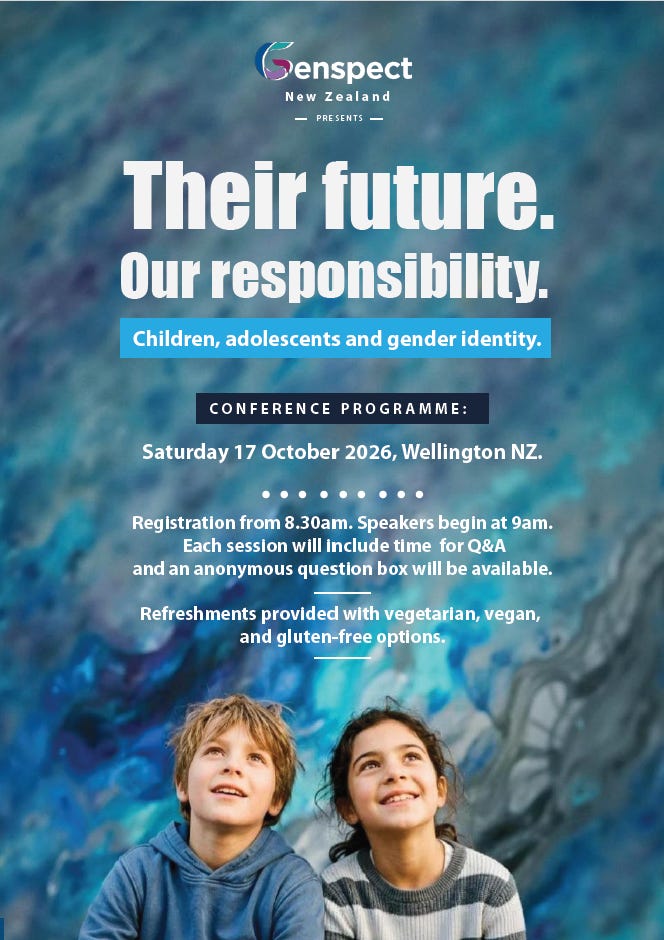
PS Don’t forget the upcoming Genspect conference. Click on this link for the programme and tickets. https://www.tickettailor.com/events/genspect/2324381
Your warning to parents to stay alert is well said. I wish someone had alerted us years ago, before seeds of the gender monster were planted in my son's brain. Too late for us, they are both lost to the cult. Thanks to counsellors and doctors, prescribed and deep into oestrogen "therapy" before we realised. Sterilised, the dream of grandchildren shattered. Keep up this fight, please.
Thanks, Fern
Excellent analysis
have cross posted
https://dustymasterson.substack.com/p/the-australian-joan-of-arc
Dusty